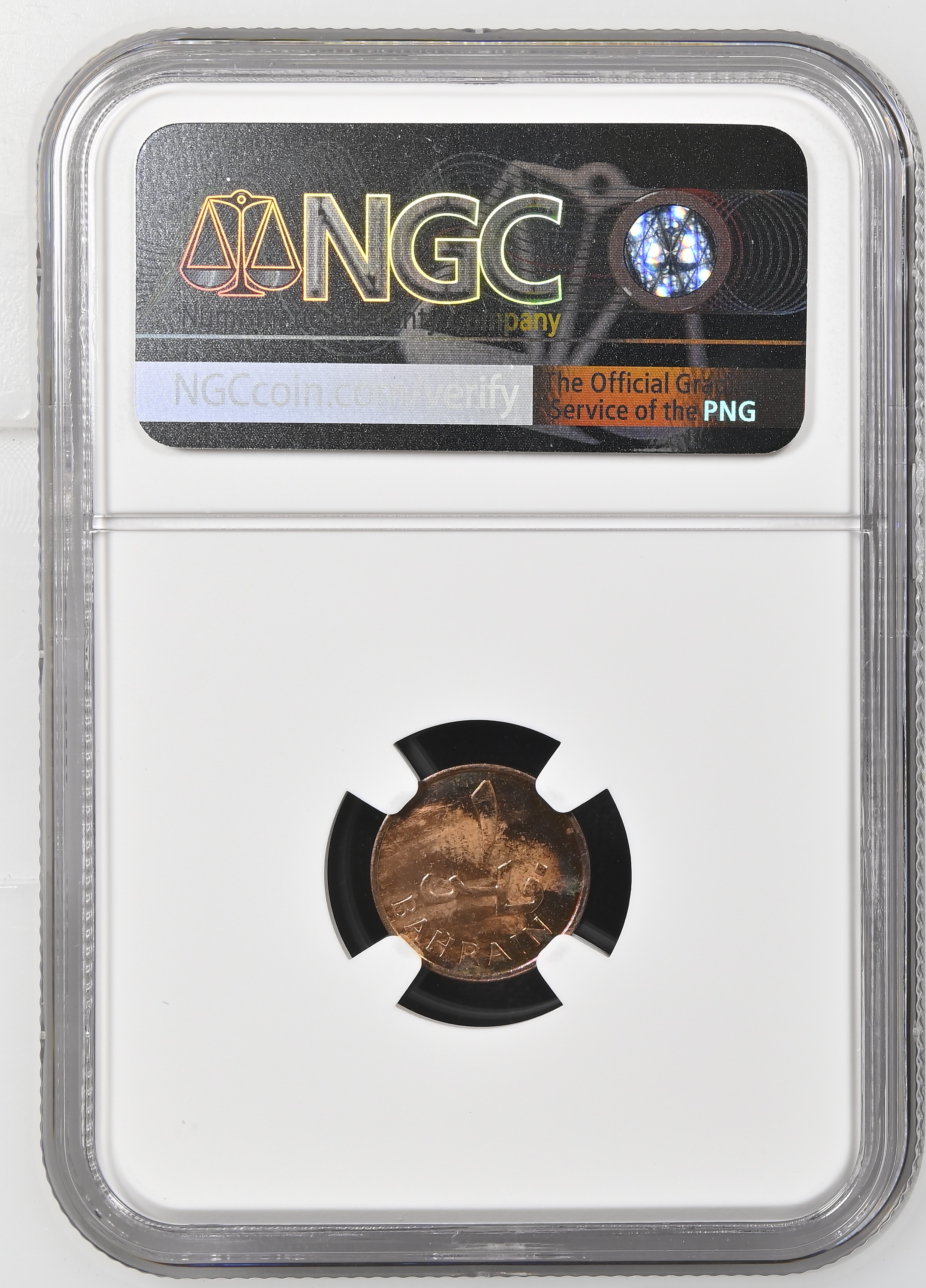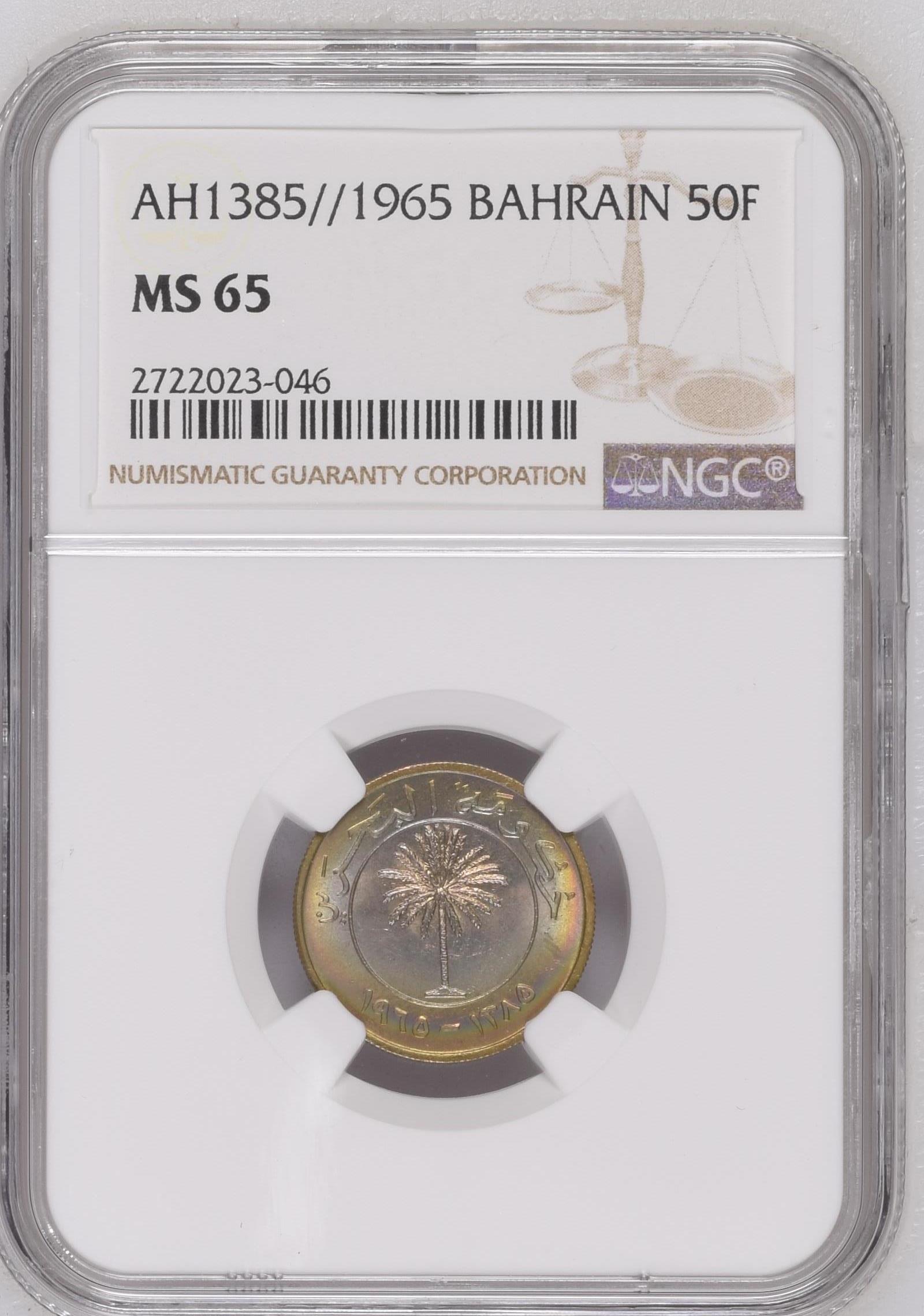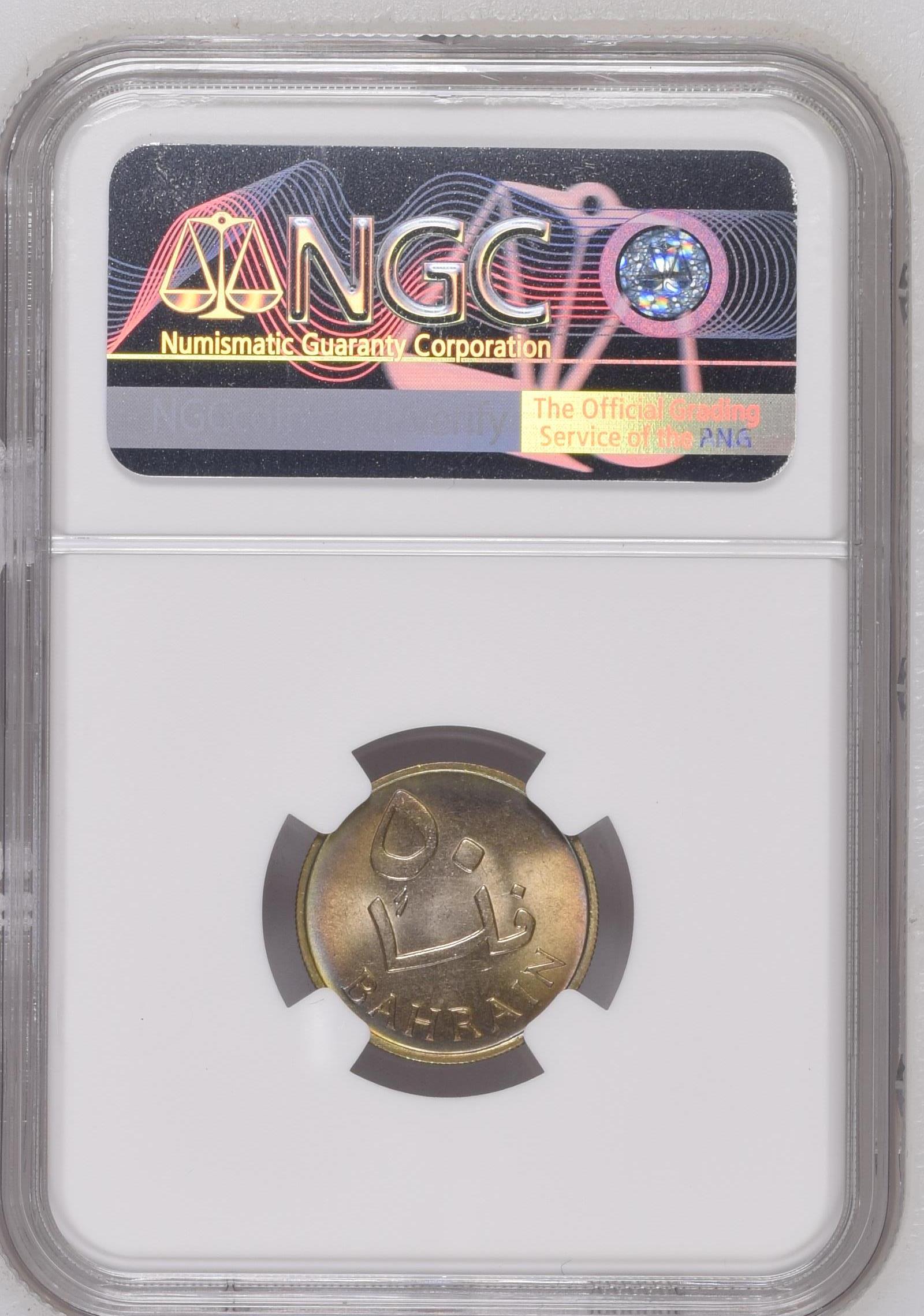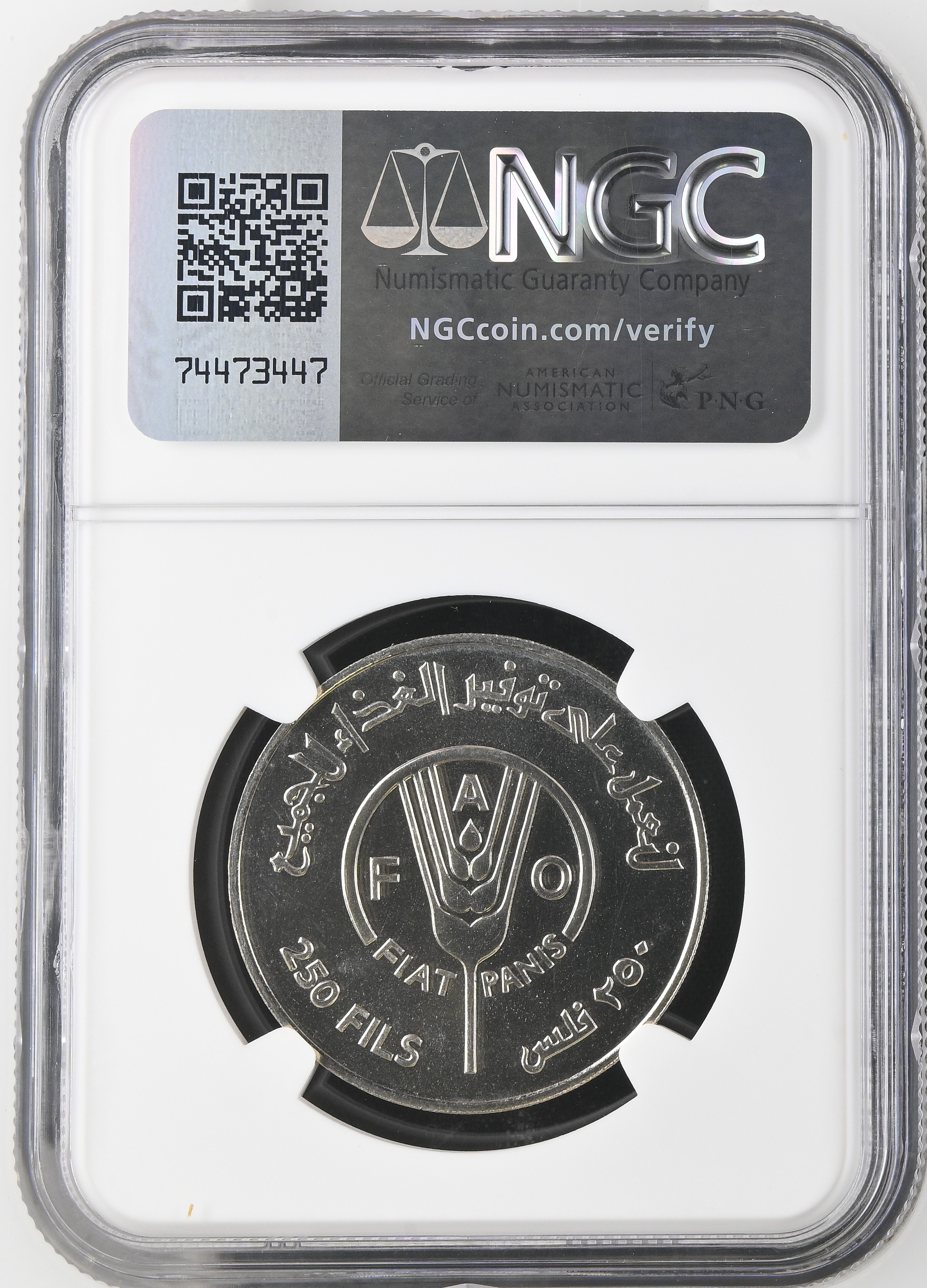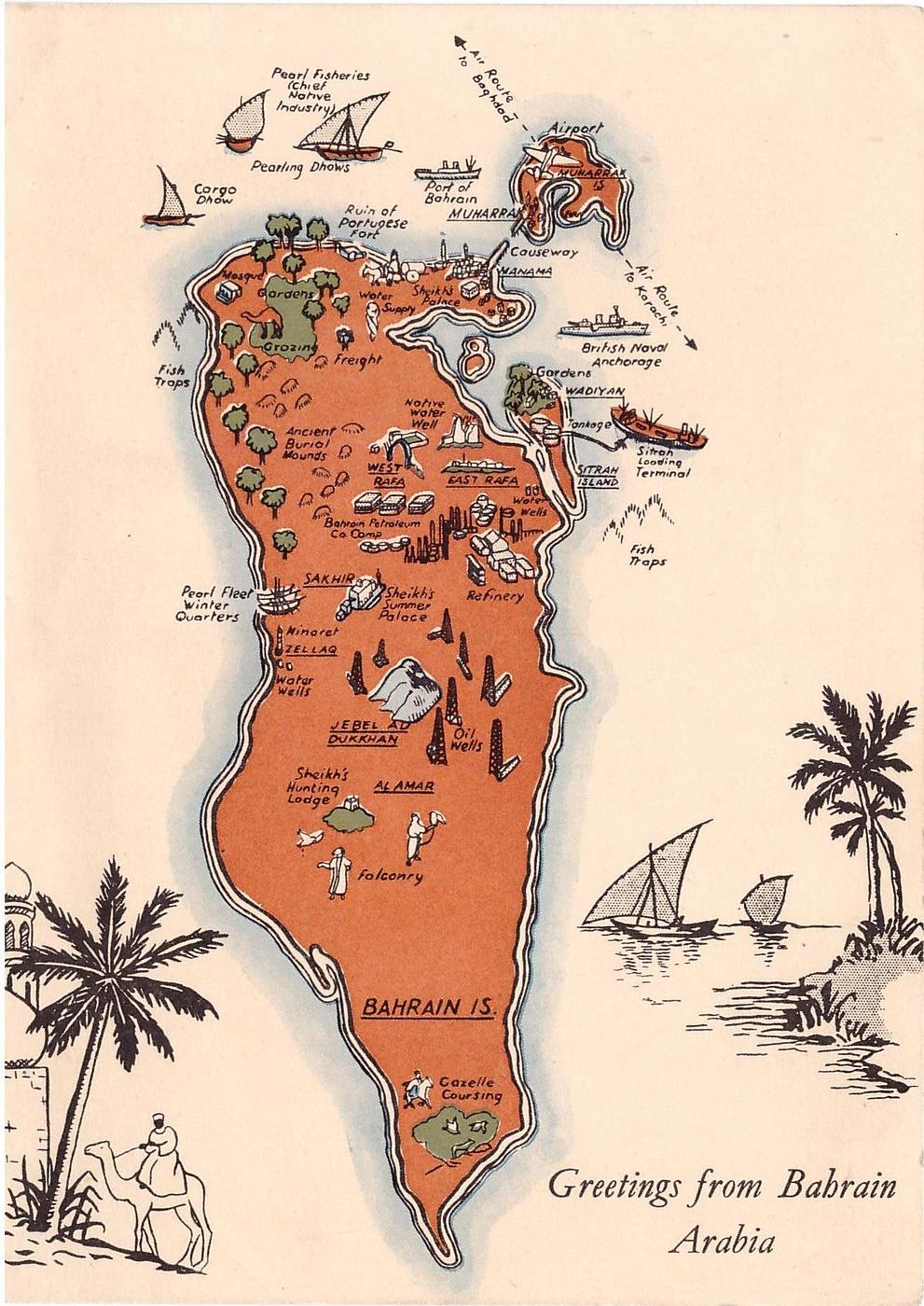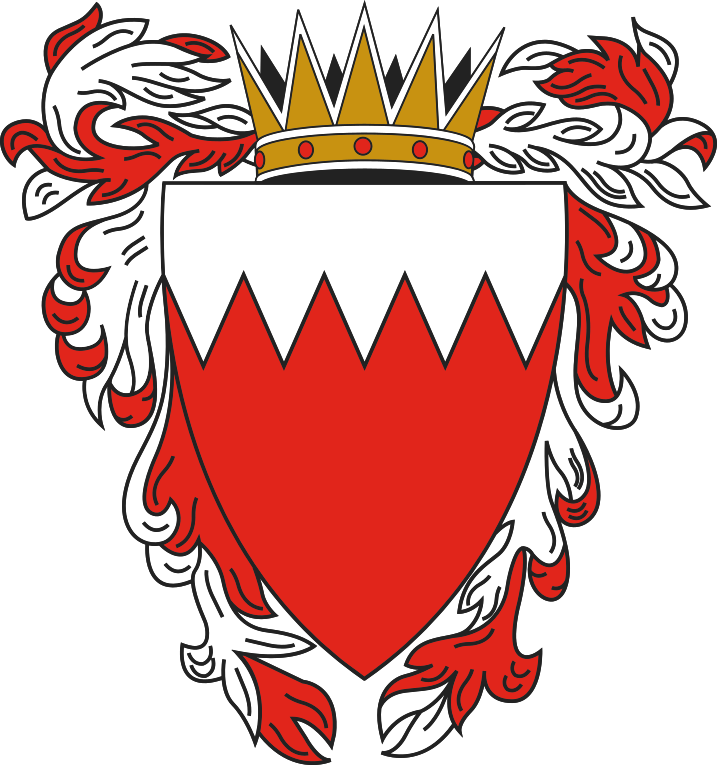

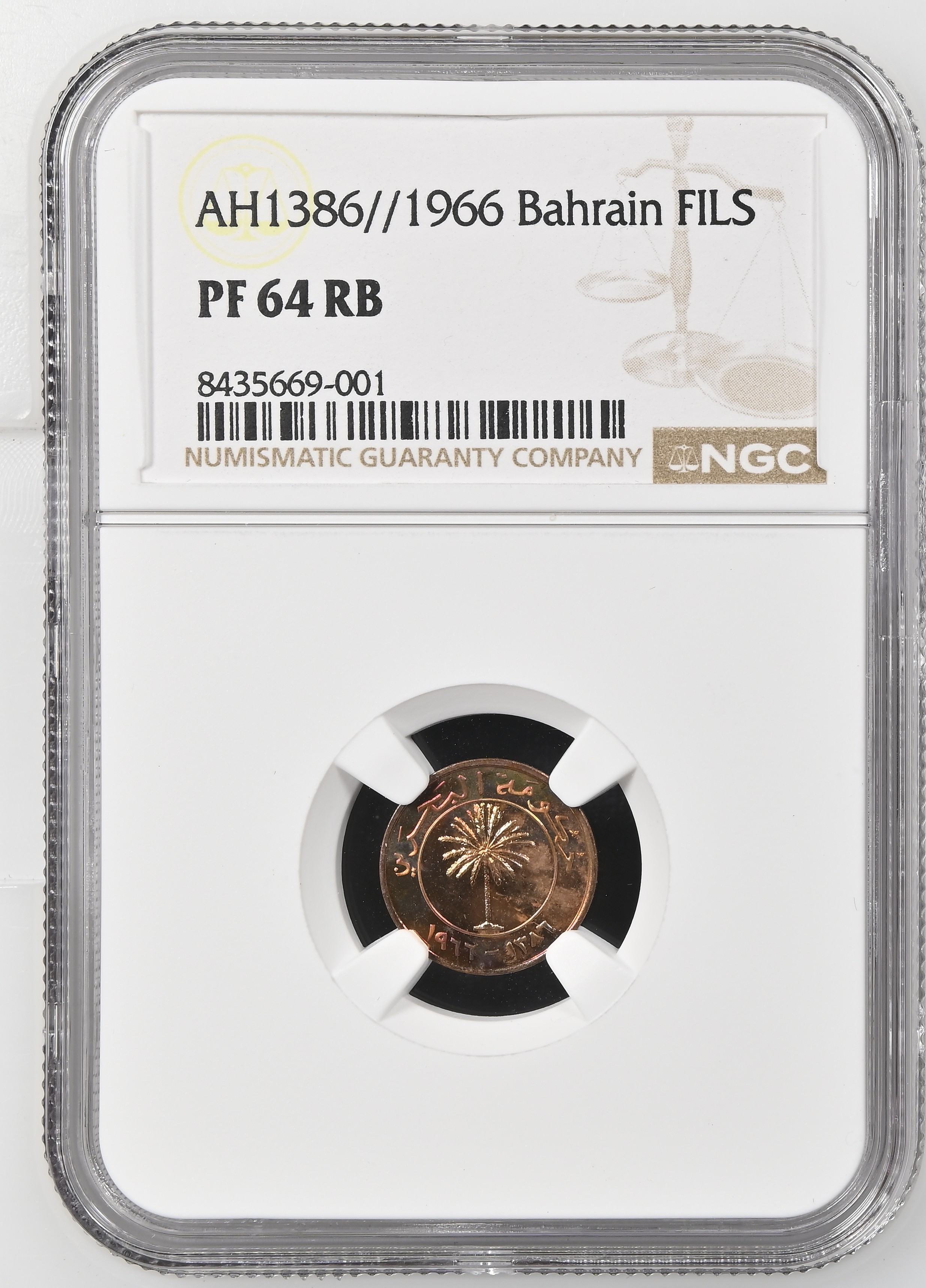
Bahrain's numismatic story begins with the Indian rupee and the Gulf rupee, which circulated across the Trucial States before independence. The Bahrain Currency Board issued the first domestic coins in 1965 — a clean fils system with denominations of 1, 5, 10, 25, 50, and 100 fils. These early pieces, struck at the Royal Mint, carry the distinctive palm tree motif.
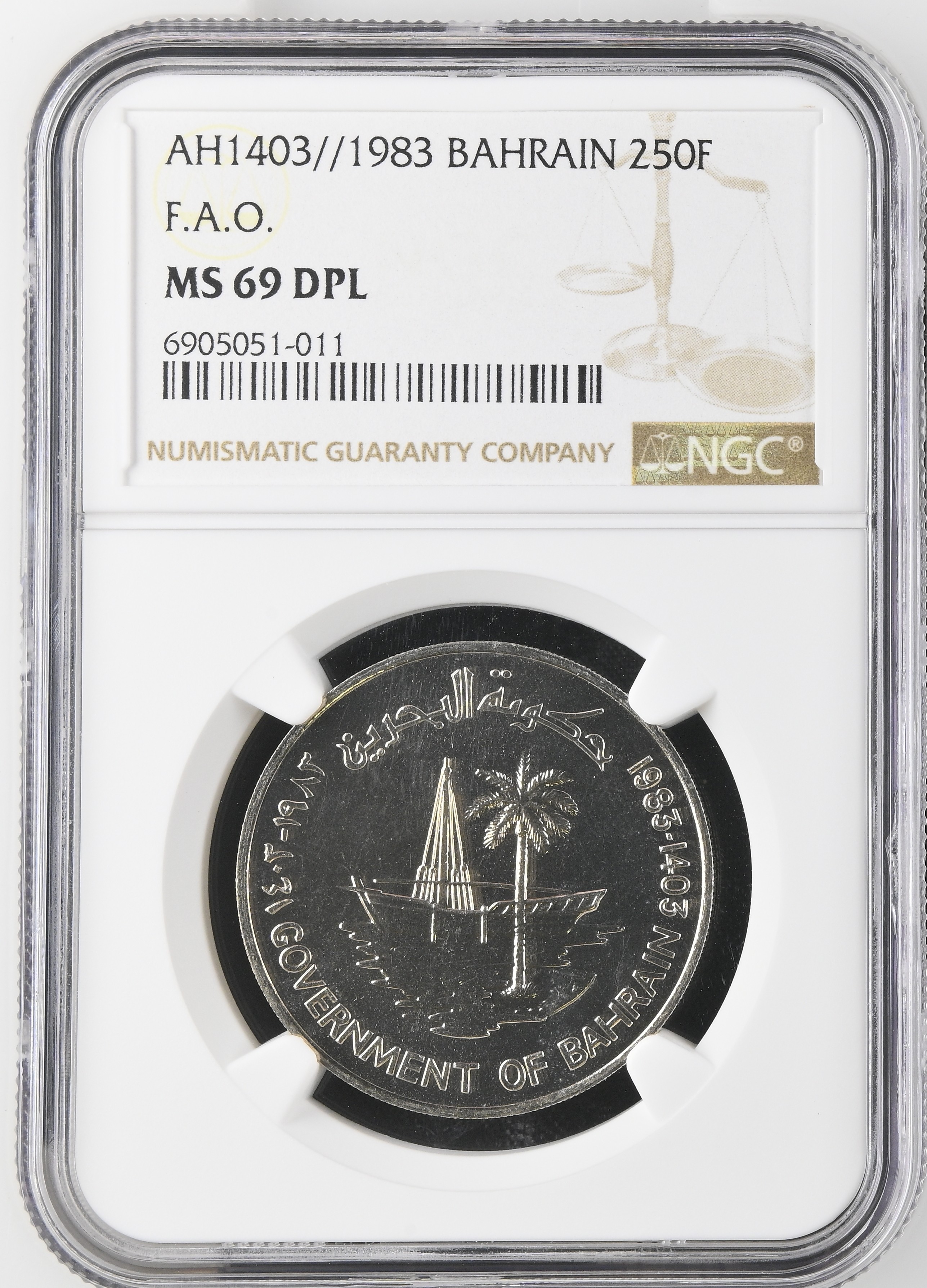
The Bahrain Monetary Agency took over currency issuance in 1973, and in 2006 the Central Bank of Bahrain assumed this role. Bahrain's commemorative program is rich for a small nation, featuring gold and silver issues marking events from the opening of the Isa Town to the 50th anniversary of the monetary system. The bimetallic 100 fils (introduced 2006) modernized the circulating series.
Every circulation coin type from the Bahrain Currency Board through the Central Bank of Bahrain, organized by era with Numista links.
Browse catalog →NGC/PCGS graded coins and raw pieces from ArabianCoins.com, plus live eBay listings.
Shop inventory →Purpose-built albums for the Kingdom of Bahrain series (1965–2011). View contents and order.
View albums →Central Bank of Bahrain, Numista catalog, Arab Collector, currency museum.
View resources →Bahrain's numismatic story begins with the Indian rupee and the Gulf rupee, which circulated across the Trucial States before independence. The Bahrain Currency Board issued the first domestic coins in 1965 — a clean fils system with denominations of 1, 5, 10, 25, 50, and 100 fils. These early pieces, struck at the Royal Mint, carry the distinctive palm tree motif.
The Bahrain Monetary Agency took over currency issuance in 1973, and in 2006 the Central Bank of Bahrain assumed this role. Bahrain's commemorative program is rich for a small nation, featuring gold and silver issues marking events from the opening of the Isa Town to the 50th anniversary of the monetary system. The bimetallic 100 fils (introduced 2006) modernized the circulating series.